Every Native woman has or will at some point in her life hear the term, "remember the moon." It is a sort of code phrase for, "remember when your period starts." I first heard it when I was invited to a sweat. I don't sweat with any men other than my husband to begin with. But I had been invited and was reminded of how my bodily functions can effect certain ceremonies. While sitting far from the lodge by a separate fire, cooking for the men who would later emerge, I focused my thoughts on the phrase. Sometime later I had a chat with an elder woman at D-Q University, where this all took place. She informed me that in the old days, Native women watched the moon to determine when they were starting. That of course has changed now with diets, environment, social behavior and of course, the calendar itself. I attempted to track my menstruation cycle by the moon and a year later gave birth to a daughter. I quickly learned that this method is less reliable today for a number of factors. That was however four years ago. I have not taken birth control or been pregnant since.
Prior to my daughter I tried more than one method of hormonal birth control. The most effective for me was Depo Provera. But I couldn't shake the looming fear of sterilization. This is something that has and continues to happen to Native women by nurses and doctors who want to "control the Indian problem." I am also prone to bouts of depression and mania known as cyclothymia. In an attempt to understand the state of my mental health I subsequently rediscovered the original form of birth control known as Remembering the Moon. Your OB/GYN will call it "using the calendar."
The Basics
The average woman has a 28 day cycle. That means, from the first day of her period until the day before her next period is a 28 day timeframe. On the 28 day cycle, a woman ovulates about the 14th day. On a 26 day cycle, such as mine, a woman will ovulate on the 12th day. The is where remembering the moon, or correctly utilizing a calendar is crucial. Knowing when you're expected to ovulate can mean the difference between conceiving and not conceiving, no matter which one you desire. Sperm has about 3 days to reach the egg. So unprotected sex up to 3 days before or after ovulation could result in a pregnancy. Two factors are mandatory for pregnancy, ovulation and fertilization. This may seem like I am repeating what everyone already knows. But just one look at Yahoo Answers will show you just how few people are aware of how their own bodies work.
The Mechanics
Use a calendar to mark down the first day of your period. This is day 1 of your cycle. Mark each day of your period. Three to five days will likely result in a 26 day cycle. Five to seven days will likely result in a 28 day cycle and seven to ten days will likely result in a 30 day cycle. This is only important the first time you begin this method and when your period suddenly changes.
On a 26 day cycle, you will likely ovulate approximately 12 days in. So, from the day after your period until about 3 days before (day 9), would be your "safe week". The same is true after you ovulate. From day 16 to 26 is your second "safe week". The very next day is day one of your next cycle.
Tracking
You should not only track your periods, but also your symptoms. Changes in mood, sleep patterns, ability to focus, etc. can all help you with fertility tracking, PMS management and identifying causes for depression. You can use any calendar or journal, but one that can fit in your purse is best. Using your smartphone is a great idea as you can send calendar alerts to yourself. You can also try MyMonthyCycle.com. This site will send you alerts and track you symptoms, cycle and fertility.
Sunday, May 4, 2014

Thursday, December 13, 2012
Native Children's Book of The Month: December
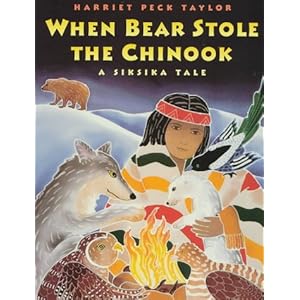
The story of the bear stealing the chinook, the moist warm wind that usually blows from the west, is an old Blackfoot story. As a Siksika Native I am partial to Siksika children's books whenever I can manage to find them in my area. If there is a tribe in an area inhabited by bears, chances are that tribe has two bear dances every year. The first bear dance puts the bears to sleep. I don't mean euthanasia. I mean actual sleep. This is usually done as the seasons change which coincides with the hibernation cycle of bears. The second dance is done, depending on the geographical location of the tribe, sometime between January and March. This dance is intended to wake the bears to kick start the beginning of the new season. When Bear Stole The Chinook is an adaptation of the Siksika tale of how the bear stole the chinook and how a boy had to steal it back and release it.
It is not a book intended for beginning readers. This is definitely a read-aloud book for younger children. The illustrations are simple yet colorful. The illustrator even used the Pendleton blanket National Parks Collection Glacier design for the boy's blanket. The story is told in a way that helps your child remember the traditional story with ease. I originally read this story to my son last winter. But he still thinks of this story the moment he sees the leaves turn yellow and orange in the fall. He asks, "Is it time to put the bears to sleep?" When winter is too cold he asks, "Should I go steal the chinook back from the bear?" This book has become a seasonal classic in our family.
Thursday, November 22, 2012
Five Steps To A Thicker Braid

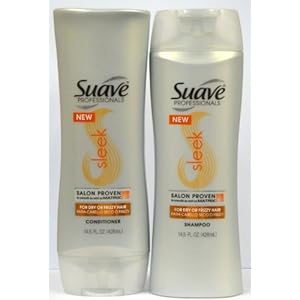
Step One: Change Shampoos
If your hair is frizzy, that doesn't mean it needs more moisture. In fact, it means the opposite. Humidity causes frizziness. You need a smoothing shampoo to make your hair sleek. Smooth hair is less likely to wind up in a tangle around the bristle in your hair brush. Less tangles means less hair loss.
Step Two: Less Conditioner
If you go overboard with the conditioner, you can weigh your hair down thus preventing fluffiness. Frizziness is your enemy, fluffiness is your friend. It makes for a thicker braid. Try using the matching conditioner for your shampoo. It would be better to go without your conditioner if you can't find it. Use a conditioning styling agent such as cremes and serums.
Step Three: Skip The Hair Ties
Most people put them on too tight to begin with. This suffocates the hair causing it to break right where the hair tie was. No matter what the label on the Goodie brand wrapper says, it will break your hair. Use hair gel on the tips of your hair to keep the braid from unraveling. Don't use hair ties at the beginning of your braid or your hair will thin out at that very spot. If you must use a hair tie, use the plastic elastic bands usually found in cheap hair supply stores.
Step Four: Wetter is Better
If you're going to braid your hair, there is no need to blow dry it. A wet braid is smoother and straighter than a dry one. Hair is most vulnerable when it is wet. So rather than walk around with a wet head of flowing hair, braid it. Never brush wet hair. If you must have your hair dry, use a heat protection product to lubricate your hair to prevent breakage.
Step Five: Leave it Down
Even braids can stress your hair. So only braid it when you need to. If you're going out, cleaning house, cooking, sleeping, you may want to braid it to prevent tangling. Otherwise, leave it down to let it breathe.
Monday, November 5, 2012
10 Things Native Americans Want Non-Natives To Know
1. We don't care what tribe your great great grandmother on your father's side is. Just say "hello", tell me your name, and shake my hand.
2. Some of us like wearing our hair short. Stop asking us if we cut our hair because somebody died.
3. Asking to see our tribal ID is like asking to see our drivers license. Unless you're a cop or a clerk accepting my application for something, don't ask to see it.
4. Don't take my picture without asking me first.
5. We come in all the colors of the rainbow.
6. Not all tribes powwow.
7. If I use the term "Indian" to describe my own people, don't proceed to tell me that I am not politically correct.
8. We're not all casino Indians. Some of us are one welfare right alongside you.
9. If we agree to teach you something, bring a gift to the first meet up as gratitude.
10. We're quiet because we're observing.
Thursday, October 18, 2012
4 Ways To Integrate Tribal Language For Your Children

2. Spanglish Approach- When I was learning to speak Spanish my neighbor spoke Spanglish to me. She would speak completely in English except for the simple words I should have already learned in Spanish class and a few words that I didn't know. Before long, I didn't realize she had completely converted her speaking to Spanish. The same approach can be used to teach a tribal language. Simply exchange one or two English words per sentence for the equivalent word in your language. For example, "Give me that candy" becomes "E-giat that candy." Make a motion that demonstrates the candy being given to you. Another example, "Put on your consuss", wave a pair of pants at your pantless child. They will be able to figure out what you are telling them to do. Before long, they won't need the rest of the sentence to be in English because they remember what some of the non-English words mean and can figure it out.
3. Photo Albums- You can make a regular habit of looking through your photo albums like a picture book. Each time you come across a family member your child recognizes, state the non-English word that describes that person. For example, when you come across a picture of yourself, you wouldn't say, "Mom." You would say, "Pia." (Or whatever the word for mom is in your language.) Another way to use your photo albums are to upload them to PowerPoint and record your voice saying the coordinating term in English and in your native language.
4. Homework- Most elementary school homework is basic and relatively easy to translate to your native language. Take a basic addition problem for example: Jack has 4 birds. Peter gives him 2 birds. How many birds does Jack have? Assuming you have already taught your child numbers and animals, this should be easy to convert. For example, Jack has watsokwee cheepa. Peter gives him wahi cheepa. How many cheepa does Jack have? Answer, nobohee cheepa. Keep the conversions simple and within the realm of what your child knows.
Monday, October 8, 2012
The Senselessness of Columbus Day

It amazes me that in this day and age we still have to inform people that he did not in fact discover America at all. He landed in the Caribbean. For whatever the reason the man never made it to the main land. It was Amerigo Vespucci that cleaned up his mess. Not only did he make his way to the main land but he went from the Caribbean to Central America all the way down to South America. Columbus thought South America stopped at Brazil. Amerigo figured out it was much larger. After realizing that Columbus was a liar, Amerigo was dispatched to do the job right. As a result, the Americas were named for him. Still, neither actually discovered any part of the Americas as Native Americans were already here.
Many still believe that Columbus was Spanish. Perhaps it is because he worked for Spain. But he was actually Italian. This could be part of the reason why it is so difficult to banish this country of the shame of the failed navigator. Every year in New York, a parade and celebration takes place to commemorate this famous Italian. Like him or not, he is a part of their history. When you consider Ellis Island and the other elements of Italian history, one can understand why they want Columbus to remain a beloved hero. Yet, no one seems to want to acknowledge Amerigo Vespucci, the navigator that helped to exposed Columbus as a fraud and did what he set out to do.
Two days following Columbus' arrival in the Bahamas, he recorded in his personal log, "These people are very unskilled in arms, with 50 men they could all be subjected and made to do all that one wished." In November 1493, on a return trip to Hispaniola, Columbus ordered the enslavement of six indigenous women for the purpose of allowing his crew to rape them, as the voyage was long and on previous voyages, the crew were resorting to "unholy interactions." In February 1495, Columbus rounded up 1,500 Arawak women, men and children, and imprisoned them. He then selected the 500 of them that he deemed the most marketable and shipped them to Spain. Only 300 arrived alive in Seville. In 1498, documents indicate that Columbus enslaved another 600 Carib people. By the decade's end, Columbus had kidnapped at least 1,400 indigenous people to send back to the Spanish slave markets.
No one would dare celebrate the Dutch in America for bringing over the first African slaves. We all know how the South was built on the backs of African slaves and much of what we have in this country today is due to interactions with those slaves. Yet there is no Dutch holiday, there is no specific day of remembrance for the Dutch traders who brought them over, but we have done just that for Columbus. So the argument that we wouldn't be here if it wasn't for Columbus is a ridiculous one. He was never here, but Amerigo Vespucci was. He didn't help build this country in any way, but slaves did. Why isn't there a national day to remember the lives of the slaves that suffered after being brought to the country against their will? Why do we take a day off to observe Columbus but not to observe Native American Heritage day?
Consider this, my parent's generation born from the 1950's and 60's are old enough to remember boarding schools. They remember suffering at the hands of the Spanish long after Columbus had died. Should they celebrate him anyway? I had a great aunt that was 107 years old when she died. She was old enough to remember boarding schools and slavery. When she was placed into a home, they used restraints to keep her from running back home. She suffered painful flashbacks of being tied down at a time when slavery was supposed to be over. She did not survive the year. Many have described her as having Post Traumatic Slavery Syndrome, (PTSS). Should she have celebrated the "accomplishments" of Columbus?
There comes a point when you have to think for yourself and stand up for what's right. It may be uncomfortable to move away from the crowd, but celebrating someone who caused so much pain makes even less sense.
Saturday, June 9, 2012
What You Should Be Doing With Your Per Cap Check
Today, I went to a pow wow hosted by an Indian casino. It was a very nice pow wow. But just as I was leaving, an Native man cut me off. The most memorable thing about him was his car. It was a convertible Mercedes...with eyelashes on the headlights. You know, the same ones intended to make VW Bugs and Beetles look cute. I couldn't help think how cheap this Mercedes looked. I wondered what kind of person would ruin the luxurious impression the Mercedes gives off? Then it hit me, the type of person who doesn't appreciate the fact that the price tag of a car like a Mercedes makes it luxurious. The type of person who could buy this car with one per cap check and still have change. The new Native millionaires. I've heard the jokes from comedians. "Native Americans are millionaires with bad teeth." As tasteless as that jokes is, talk to a bunch of non-per cap Indians and they will agree with the joke.
There's a term most widely used in the Black community, "hood rich." It means, the moment the poor person from the ghetto gets a hold of funds they spend it on material things rather than take care of necessities like health or dental care. The reason is, when you've been poor for so long, the last thing you feel like doing when you finally receive money is spend it on something you can't immediately enjoy, like a material possession. Native people have gone without for so long that it's hard to see spending that large check on something reasonable. It's like winning the lottery every month. But just in case one of my readers is one of those lucky per cap Indians, here is a list of things you should be spending your money on, rather than a depreciating car.
Native American Child Care Centers
The first 5 years of a child's life are the most important in their emotional and intellectual development. Yet many Native families are forced to place their children in someone else's care in an effort to support themselves. It's bad enough that the person is a stranger, but now the person has virtually no understanding of your child's culture. Before you know it, your child is having self worth issues that you can't seem to understand. A Native American child care center, off the reservation or rancheria, would help preserve Native culture and improve self-image and self-esteem.
Native American Sports League
In the memory of Jim Thorpe, there should at least be a football or track league solely for Native athletes. A movie was just released about a Native American lacrosse team. Why not keep that fire going by creating a league in your area? Maybe even create the Native American Olympics?
Native American Production Company
Whether it's television or film, the best way to change Native American stereotypes is to make your own movies and TV shows. If it weren't for BET and Tyler Perry, there would continue to be a steady stream of Roots, The Color Purple and Jason's Lyric type movies. Tyler Perry took White America from seeing a Black cast in a movie as a "Black" movie to just a movie. The fact is, when people see Natives in movies, people see Dances With Wolves or Thunderheart. It's time to show people the other side of Native culture. What better way than to control your own media.
Native American Radio Station
We're not talking pow wow radio here. There are enough of those out there. We're talking about Native American pop and rap stars, jazz, country, R&B etc.
No matter what you spend your money on, make sure you give back to the Native community around you. What good is money if you loose your soul?
Subscribe to:
Posts (Atom)